



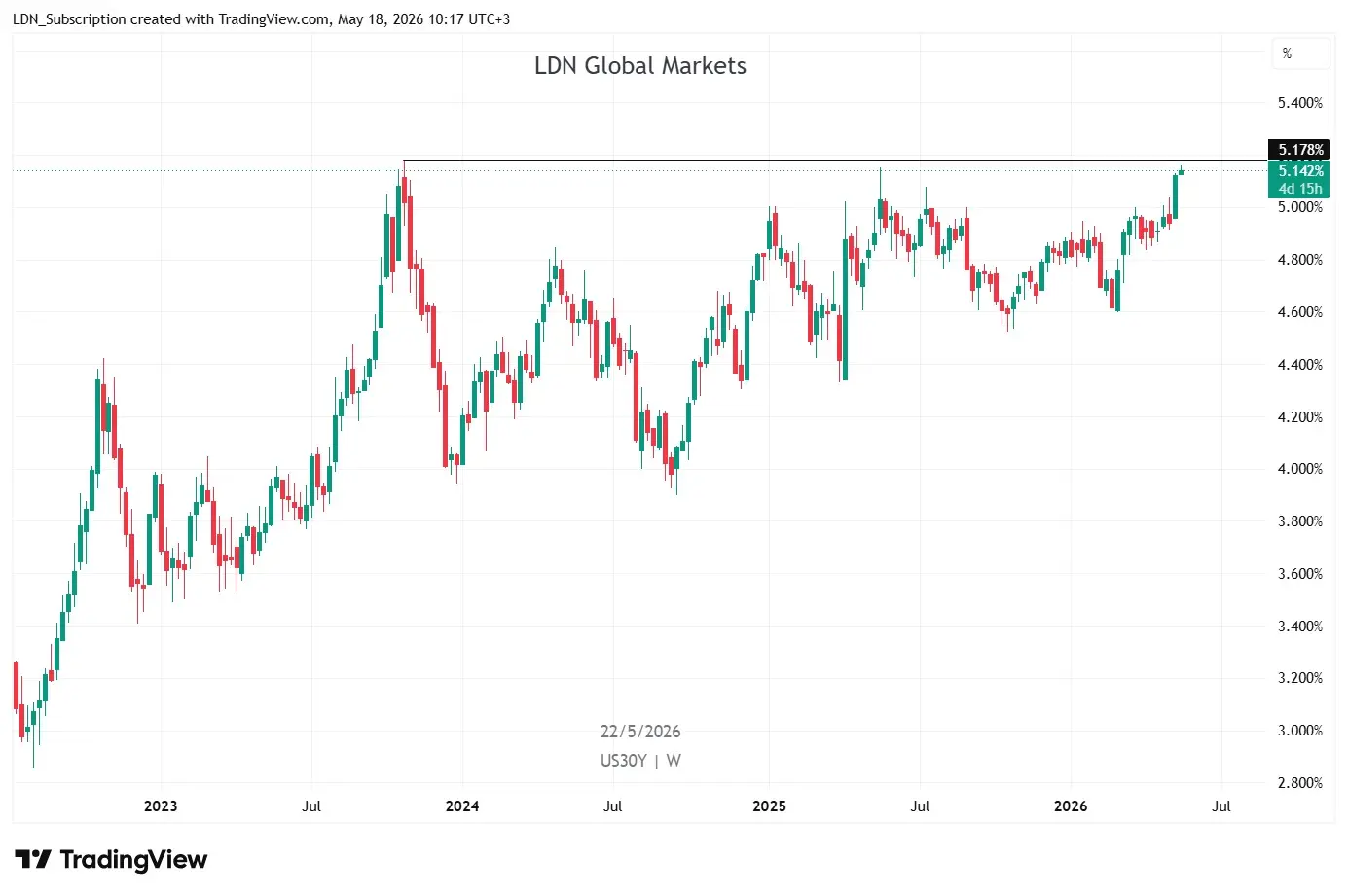
Long-term U.S. Treasury yields rose to levels not seen since before the global financial crisis after the U.S. Treasury sold 30-year bonds at a yield exceeding 5% for the first time since 2007, signaling growing investor concerns about inflation and the future path of U.S. monetary policy.
These developments coincided with the U.S. Senate’s confirmation of Kevin Warsh as the new Chair of the Federal Reserve, succeeding Jerome Powell, at a time when markets are facing mounting pressure from persistently high prices and rising borrowing costs.
The yield on 30-year U.S. Treasury bonds reached around 5.02%, while the yield on 10-year Treasuries stabilized at 4.44%, amid fears that inflation may remain elevated.
Recent U.S. inflation data showed consumer prices rising by 3.8% compared with the same period last year, driven by higher energy prices resulting from tensions and conflict with Iran, pushing inflation further away from the Federal Reserve’s 2% target.
Producer price data also indicated continued inflationary pressures within the U.S. economy, reinforcing market expectations that the central bank may struggle to cut interest rates in the near term.
Rising bond yields carry broad implications for the U.S. economy, as they increase borrowing costs for mortgages, corporate financing, and consumer credit, while also raising the government’s debt servicing burden at a time when U.S. public debt is approaching $40 trillion.
Investors believe that continued economic growth, higher energy prices, and expanding government spending could keep inflationary pressures in place despite the tight monetary policy maintained over the past two years.
The move above the 5% threshold for long-term U.S. Treasury yields is viewed as a significant symbolic level not seen since 2007, reflecting the major transformation in global bond markets over the past two years.
Kevin Warsh faces a complex economic environment as he takes over leadership of the Federal Reserve. He has previously advocated maintaining the central bank’s credibility in fighting inflation, while also supporting reforms related to communication policies and balance sheet management.
Market expectations remain divided over the Federal Reserve’s next move. Some believe interest rates should remain elevated for longer to contain inflation, while others warn that continued monetary tightening could weigh on economic growth and the labor market.
Higher energy prices caused by geopolitical tensions and the conflict with Iran are currently seen as one of the main drivers of inflation, placing U.S. monetary policy before challenges that extend beyond the Federal Reserve’s direct control.
Analysts view the latest Treasury auction results as an early test for the new Federal Reserve Chair, as higher yields could help tighten financial conditions without the need for additional rate hikes, but at the same time increase pressure on households, businesses, and the heavily indebted U.S. government.
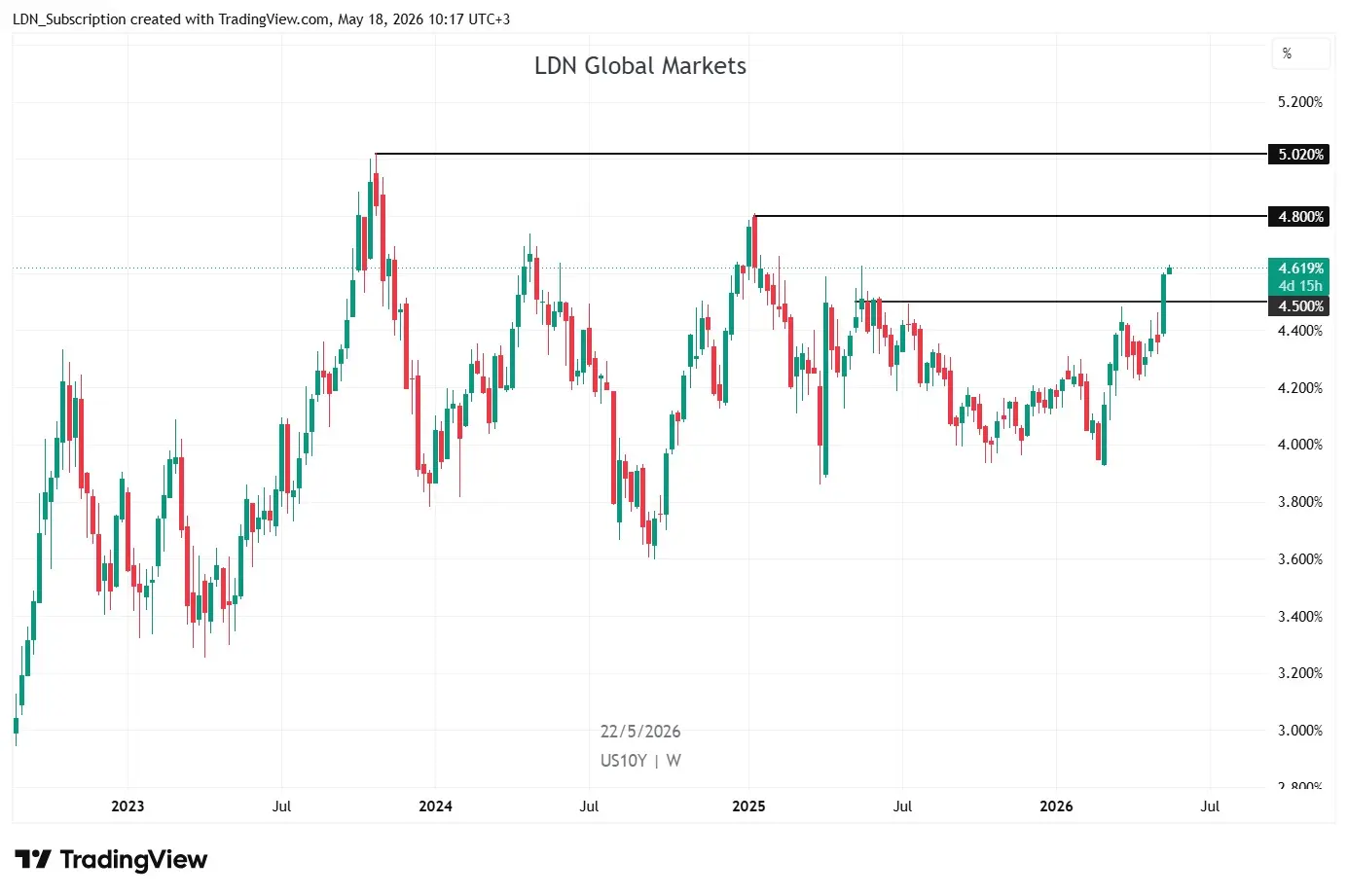
Yields on 10-year bonds
You can now benefit from LDN company’s services through the LDN Global Markets trading platform.


