



Oil has reasserted itself as the dominant force in global markets, driving cross-asset price action and forcing equities and bonds into a reactive stance. A sharp rally in crude, with Brent climbing $114 per barrel, has reset market sentiment, pulling major stock indices off recent highs while pushing long-term bond yields back above the psychologically significant 5% level. The move marks a return to a familiar regime in which energy prices tighten financial conditions and ripple quickly across asset classes.
Initial optimism surrounding efforts to secure shipping routes through the Strait of Hormuz faded quickly as geopolitical tensions escalated. Reports of Iranian strikes on UAE-linked assets reignited concerns over supply disruptions, reinforcing it’s role at the center of market dynamics. The situation has evolved beyond a temporary shock, with markets increasingly pricing in a prolonged constraint on global energy flows.
This shift is critical because it signals a transition toward supply-driven inflation. Unlike the demand-led inflation of recent years, which central banks could attempt to manage through tighter policy, energy-driven price pressures are more persistent and less responsive to rate hikes. The dynamic resembles past oil shocks in mechanism, though today’s more interconnected and financialized system amplifies the speed and reach of such disruptions.
Despite mounting geopolitical risks, the broader economic backdrop remains relatively resilient. Growth indicators are stable and corporate earnings continue to improve, providing a degree of support for equities. However, this strength has not been sufficient to offset the drag from higher energy costs and rising rate expectations. Markets are effectively balancing two competing narratives: strong earnings momentum, particularly in AI-related sectors, and escalating geopolitical uncertainty.
Rate expectations have adjusted accordingly, with investors increasing the probability of further policy tightening into 2026. At the same time, liquidity conditions remain thin, exacerbating market volatility and making price action more sensitive to headlines.
While the bullish case for equities has not been invalidated, it has been delayed. The path forward remains heavily dependent on developments in the Middle East and, by extension, the trajectory of oil prices. Until stability returns to energy markets, crude will continue to dictate broader financial conditions, acting as an implicit tax on growth and a key driver of global risk sentiment.
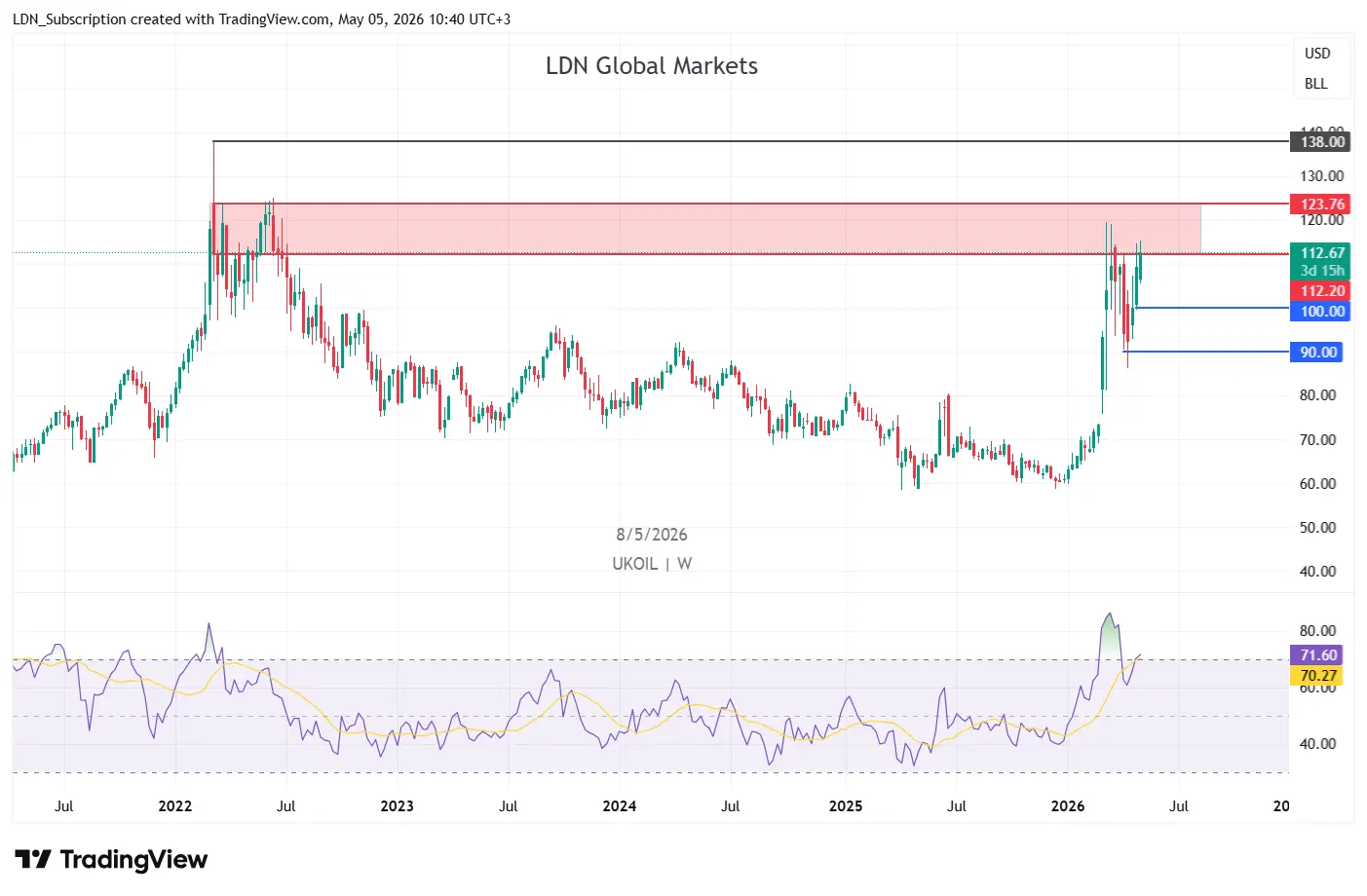
From a technical perspective, Brent crude is trading within a supply zone ranging between $112.20 and $123.75. If prices manage to break above this supply range, the next target would likely be the previous peak at $138. On the downside, if prices decline, the current support levels are seen between $100 and $90.
You can now benefit from LDN company’s services through the LDN Global Markets trading platform.


