



The U.S. economy added 172,000 jobs in May, beating economists’ expectations of around 105,000, while the unemployment rate held steady at 4.3%, according to data from the Bureau of Labor Statistics.
The report also showed upward revisions to previous months’ figures, with March job gains raised to 214,000 and April to 179,000. This brought the average monthly job creation over the past three months to about 188,000, indicating a gradual improvement in labor market momentum compared to last year.
Despite strong employment data, annual wage growth slowed to 3.4% from 3.6% in the previous month. This comes as inflation expectations remain elevated, raising concerns that real wage growth may continue to weaken and put pressure on household purchasing power.
Job gains were led mainly by leisure and hospitality, local government, and healthcare and social services, alongside modest improvements in construction, manufacturing, and transportation, while hiring remained weak in information and financial services.
In financial markets, U.S. 30-year Treasury yields climbed above the 5% level, reflecting growing concerns that inflation may remain elevated for longer and that interest rates could stay higher for an extended period. This increases borrowing costs and weighs on equity valuations.
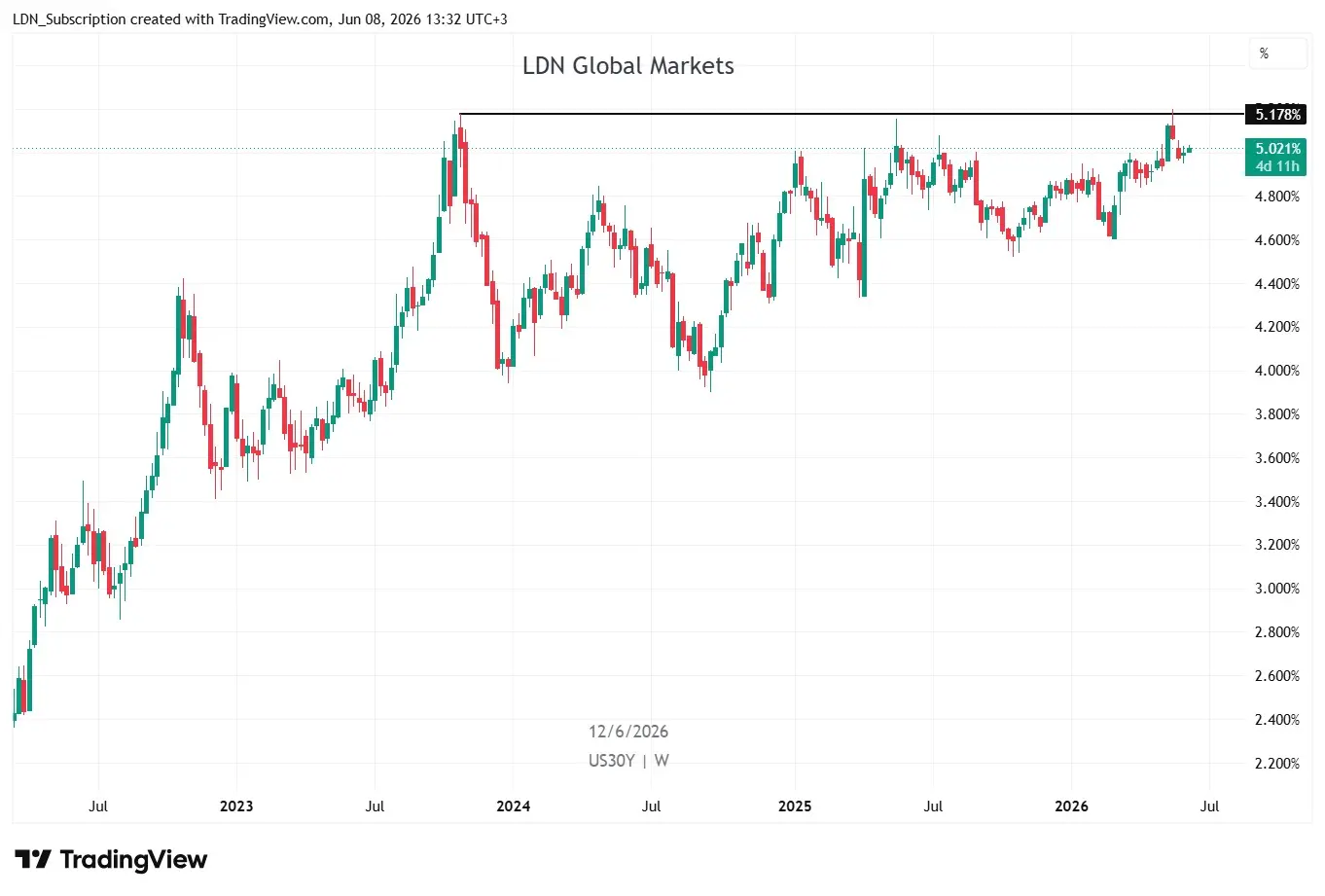
At the same time, the Nasdaq index came under strong selling pressure, falling by around 5%, signaling a shift away from high-risk assets, particularly technology and growth stocks, toward safer instruments such as government bonds, amid rising uncertainty over monetary policy and the economic outlook.
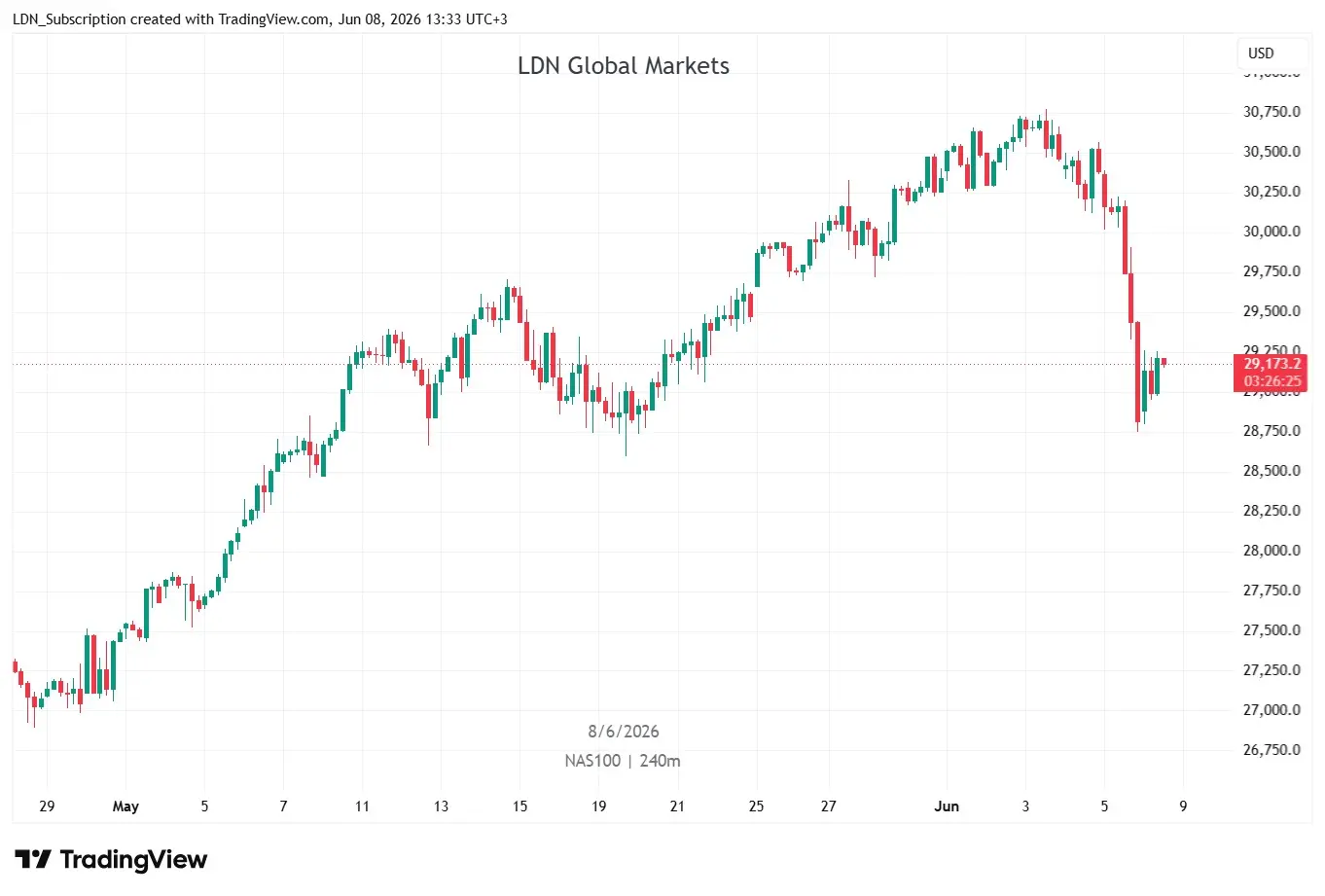
Analysts say the labor market continues to show resilience, but persistent inflationary pressures and rising energy costs remain the key challenges for the U.S. economy in the coming period, especially as investors await upcoming inflation data that will be crucial in shaping the Federal Reserve’s interest rate path.
You can now benefit from LDN company’s services through the LDN Global Markets trading platform.


